Even the people who start and fund iconic companies often underestimate how big they can become.
Today is the 50th anniversary of Apple Computer Company.
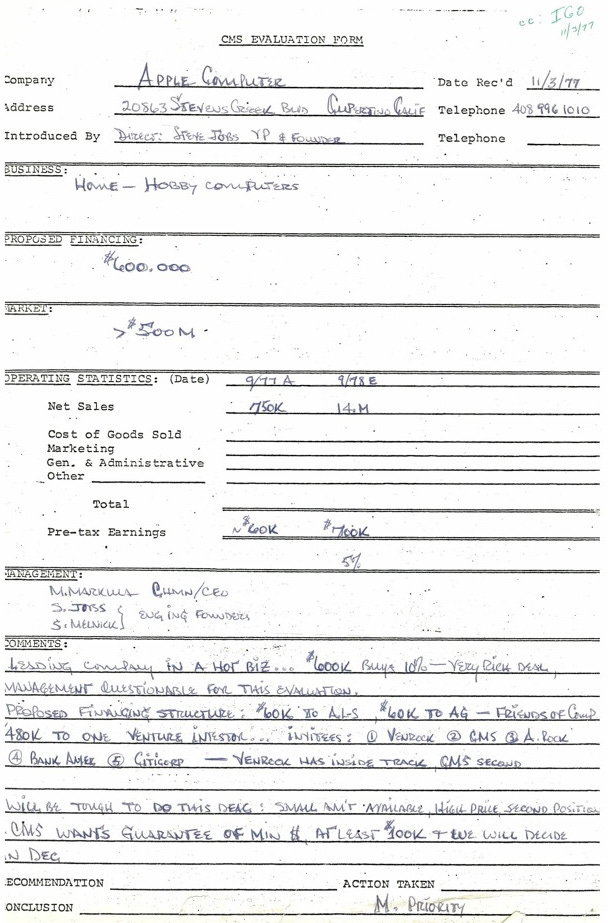
In recognition, Sequoia published their investment memo written by the firm’s founder Don Valentine:
Note the following from the memo:
“$600k buys 10%...very rich deal.”
“Market: >$500M” (~2.7B adjusted for inflation)
“Business: Home — Hobby Computers”
Quaint startups and building for hobbyists
While the valuation sensitivity is amusing when you consider how valuation-insensitive many VCs have become, I find the second and third bullet points far more interesting: smart people in Silicon Valley didn’t realize just how big personal computers would become.
Quaint startups can succeed by saturating a small market before moving into larger adjacent ones. If the transition to a bigger market works out, it can cause a quaint startup to turn into one of the most important companies in the world.
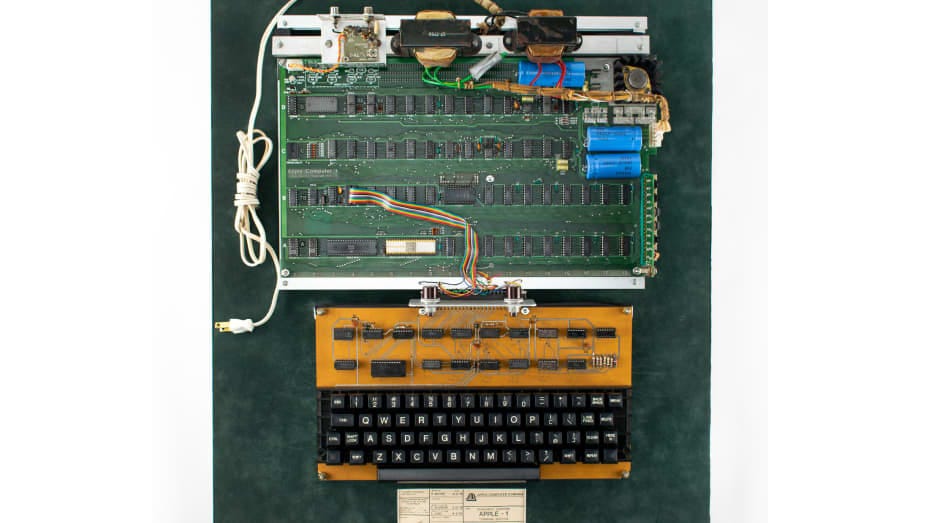
Consider Apple’s first computer. It was not a device for the uninitiated. It barely looked like what we’d think of a computer in modern terms. It was just a circuit board—no elegant case to enclose it or screen or keyboard included.
The Apple I circuit board with a keyboard (not included)
According to Steve Wozniak, he and Steve Jobs had planned to sell a bare circuit board with no components included. He thought they might be able to sell 50 of them to the hardware hobbyists they knew in Menlo Park—but it would not be easy. Instead of selling a bare circuit board that would require work for the purchaser to assemble, a personal computer retailer named Paul Terrell convinced the duo that customers wanted a prebuilt computer. Terrell offered to buy 50 immediately if they made them.
His experience selling the first Apple computer caused Steve Jobs to realize how a much larger group of people would be interested in a personal computer if it were ready to be used immediately upon purchase. That insight led to the Apple II, which included a sleek case that housed the internal hardware. It was a massive success and sold nearly five million units.
At first, [the computer] was a hobbyist tool. The Apple II was successful because we saw that for every hardware hobbyist that wanted to put a hardware kit together, thousands of software hobbyists didn’t know how to do that and didn’t have soldering irons but wanted to mess with software. So we sold the first ready-to-go personal computer.
Few quaint startups discover a larger adjacent market and win it as Apple did with the Apple II. But that wasn’t the last time Apple accomplished the feat—nor the most impressive. Their most significant move to a larger adjacent market would come two decades later with the launch of the iPod in 2001. Their new music player and the iTunes store would cause the company to become one of the most important in the world—moving beyond dominating personal computers and into the broader technology and media industries.
In search of the quaint (that becomes the big)
It’s very easy for founders to become focused on the hot thing or the big thing.
It’s easier to get validation (and valuation) from investors and everyone thinks you are very cool and smart for going after something that is understood (consensus) as a good opportunity.
Make no mistake, there is money to be made doing that, and I enjoy working with founders who catch the wave right on time (exhilarating). But many of the great opportunities won’t seem widely obvious early on. Their markets might seem small, unimportant, or the customers simply not worth the hassle.
I look forward to working with more “quaint startups” in the future. If you’re a solo founder, be sure to reach out.
Weisser's Multitudes is a reader-supported publication. To receive new posts and support my work, consider becoming a free or paid subscriber.